Product design work is usually the part of an engagement clients least want discussed publicly, because interface decisions telegraph roadmap decisions. We also will not publish an improvement percentage we cannot evidence, and the analytics that would substantiate one belong to the client. We are happy to walk through anonymized flows, research artifacts, and handoff documentation on a call, and will publish a named case study only when a client agrees to share verifiable before-and-after data.
We design experiences that delight and convert
Research, structure, and interface design handled as one decision rather than three handoffs. You get flows validated on a clickable prototype before engineering commits, and documentation your developers can build from without guessing.
Evidence over opinion · testable prototypes · documented handoff
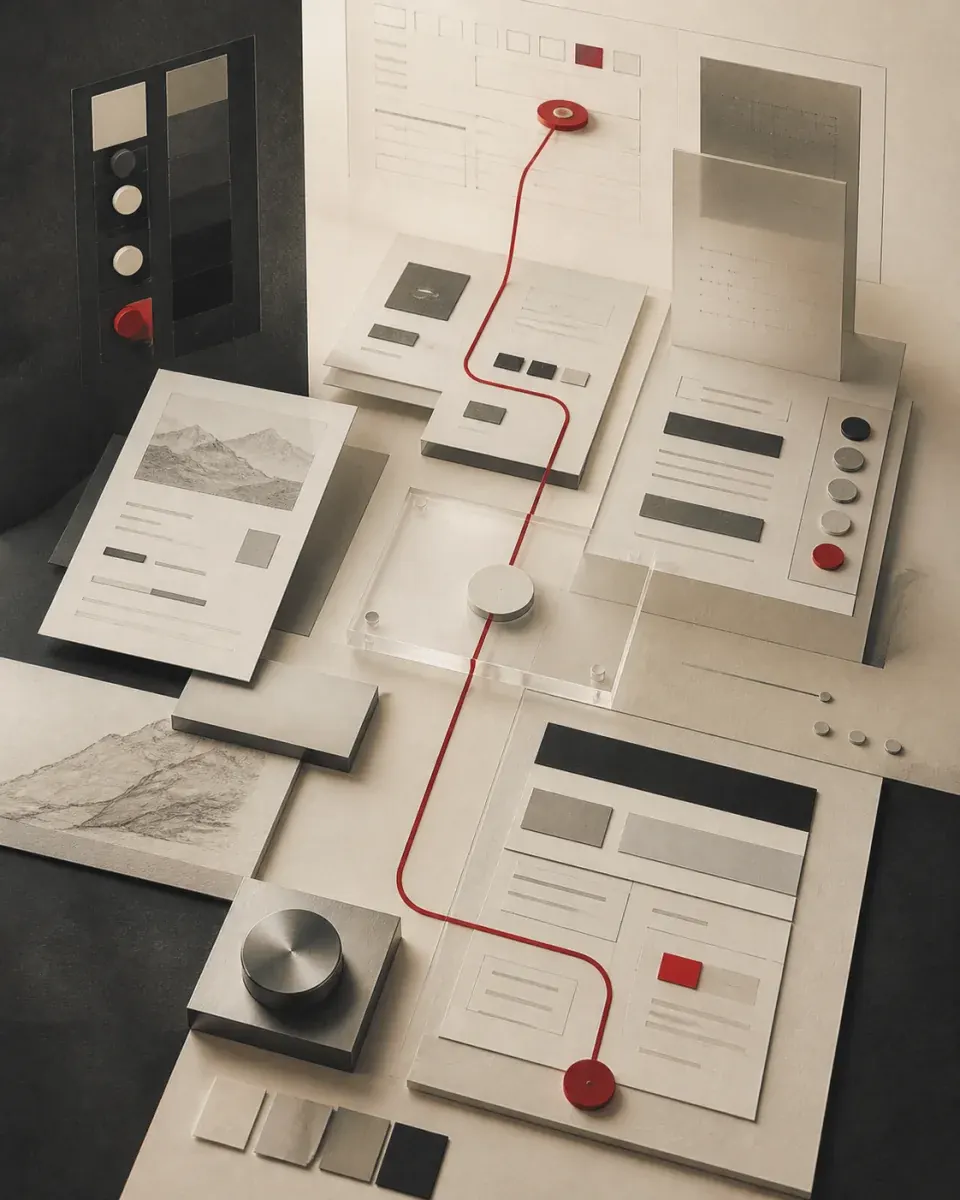
What the design work protects
Decisions validated before engineering time is spent
One consistent system instead of one-off screens
A handoff your developers can build without guessing
Evidence status
Proof before promotion.
What a struggling interface looks like
Design problems announce themselves through support tickets and drop-off, long before anyone calls them design problems.
What good structure produces
What changes when structure is decided before surface, and tested before it is built.
Fewer steps between intent and completion
The paths people actually take get shortened and clarified. Removing friction from an existing journey is usually the cheapest improvement available, because the demand is already there.
An interface that teaches itself
Labels, grouping, sequence, and defaults carry the explanation, so first-time users can complete the core task without a walkthrough and your support load drops accordingly.
A design system instead of loose screens
Components, tokens, type and spacing scales, and documented states mean the next feature is assembled from decisions already made rather than designed from zero.
Decisions you can defend with evidence
Flows, usability sessions on prototypes, and analytics from the existing product replace opinion, so the team stops relitigating settled questions.
A handoff engineering can build from
Component specs, states, edge cases, empty and error conditions, and responsive behavior are documented, so implementation is execution rather than interpretation.
User and competitor research
Task and journey flows
Information architecture
Wireframes for every key screen
Visual design and interface system
Component library and design tokens
Interactive clickable prototype
Usability testing sessions
Responsive behavior specifications
Accessibility review
Developer handoff documentation
Design QA during implementation
User and competitor research
Task and journey flows
Information architecture
Wireframes for every key screen
Visual design and interface system
Component library and design tokens
Interactive clickable prototype
Usability testing sessions
Responsive behavior specifications
Accessibility review
Developer handoff documentation
Design QA during implementation
Six stages, each with an artifact
Six stages, each producing an artifact you can review — not a black box that emits a finished interface.
Typical working stack
Figma · Design tokens · Interactive prototyping · Moderated usability testing · GA4 and product analytics · WCAG accessibility checks
01
Research
We learn the business, the people using the product, the tasks they are trying to finish, and where the current experience loses them. Where an existing product has analytics or session data, that evidence goes in first, because it describes real behavior rather than remembered behavior.
02
Architecture and flows
We map the tasks and decide what belongs on which screen, in what order, before anything is drawn. This is where most usability problems are actually solved, and it is the cheapest point at which to solve them.
03
Wireframes
Low-fidelity screens establish hierarchy, grouping, and sequence without visual styling clouding the judgement. Reviewing structure separately keeps the conversation about whether the thing works rather than whether the blue is right.
04
Visual design and system
The interface is styled against your brand into a component system with tokens, states, and scales — so the design is reusable infrastructure rather than a set of unique pictures.
05
Prototype and test
You get a clickable prototype and we put real people through the core tasks. Watching someone fail a flow before it is built is dramatically cheaper than discovering it after engineering has shipped it.
06
Handoff and design QA
Specs, states, edge cases, and responsive behavior are documented for engineering, and we stay available during implementation to answer questions and check what gets built against what was designed.
How long design takes
Focused flow or single feature
2–4 weeks
Full marketing site or small product
4–8 weeks
Multi-screen product with research
8–14 weeks
Design system build
Runs alongside, adds 2–4 weeks
Timing moves with the number of unique screens, how much research is needed before decisions can be made honestly, how quickly participants can be recruited for testing, and how many stakeholders review each stage. We agree the stages and their deliverables before starting, and flag scope changes when they appear rather than at the end.
$3k–$15k, scoped by depth
Discovery and design engagements typically run $3,000 to $15,000 depending on how many screens are involved and how much research the decisions require. This is design work priced on its own — a full website project is a separate engagement starting at $6,000, listed at three levels on the pricing page. We quote a fixed scope in USD after a short discovery conversation, and design system work or ongoing support is quoted separately again.
Questions about the design engagement
How decisions get validated, what you actually receive, and how this fits alongside an in-house engineering team.
01 / 07
How do you validate design decisions?
With evidence rather than opinion: user flows, usability testing on prototypes, and analytics or session data from your existing product where available.
Related expertise
Test the flow before you build it.
Tell us the task your users keep failing. We will map it, prototype it, and put real people through it before engineering writes a line.
Get your quote