
The Foundation: Google Business Profile
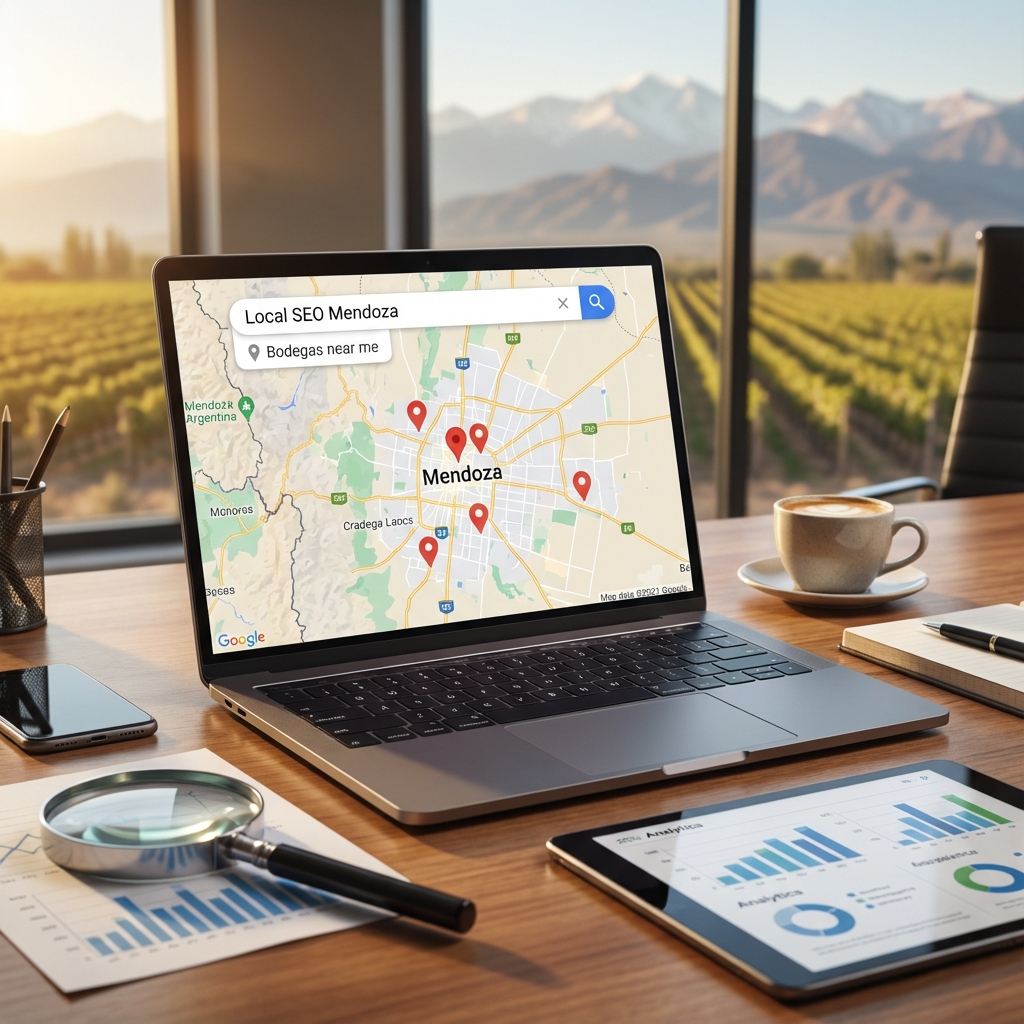
Google Business Profile (GBP) is the cornerstone of Local SEO. It's the listing that appears in the Map Pack — those top 3 results with a map that appear before all organic results for local searches.
Getting into the Map Pack for your primary keywords can single-handedly transform your business. It means being discovered by hundreds of potential customers every month at zero cost per click.
Step 1: Claim and Verify Your GBP
- Go to business.google.com and claim your listing
- Verify via postcard or phone (takes 1–5 days)
- Complete 100% of all available fields
- Choose the most specific primary category for your business
Step 2: Local Keyword Research
Your goal is to rank for "your service + your location." Examples:
- "Web design Mendoza" (high volume, high competition)
- "Web design Godoy Cruz" (medium volume, lower competition)
- "Affordable web designer near Mendoza" (long-tail, buyer intent)
Start with long-tail keywords targeting specific neighborhoods or services. They're easier to rank for and often convert better.
Step 3: On-Page Local Optimization
Every page on your site should communicate location to Google:
- Include your city/neighborhood in page titles and H1 headings
- Add a Google Maps embed on your contact page
- Use LocalBusiness schema markup
- Ensure your NAP (Name, Address, Phone) is in text format in the footer
Step 4: Build Local Citations
Citations are mentions of your business name, address, and phone on other websites. The more consistent and numerous your citations, the stronger your local rankings.
Top citation sources for Mendoza businesses:
- Cylex Argentina
- Yellow Pages Argentina
- Yelp
- Facebook Business Page
- LinkedIn Company Page
- Local chambers of commerce
Step 5: Generate and Manage Reviews
Reviews are the #1 trust factor for local businesses. They influence both your ranking in Maps and whether someone actually clicks on your listing.
Review generation strategy:
- Create a short link to your Google review form
- Send it to clients after every successful job
- Respond to every review within 24 hours
- Address negative reviews professionally — future customers are watching
Step 6: Local Content Marketing
Publishing local content on your blog signals to Google that you're genuinely relevant to your area. Write about:
- Local industry news and trends
- Neighborhood-specific guides
- Success stories from local clients (with permission)
- Local events relevant to your industry
Measuring Your Local SEO Results
Track these KPIs monthly:
- GBP calls and direction requests
- Google Search Console local keyword rankings
- Organic traffic from local searches
- Review count and average rating
"Local SEO is a compounding investment. The work you do today continues to pay off for years."
Recommended Services
If you are looking to boost your business, we recommend our SEO consultancy in Mendoza or requesting a personalized web design quote.